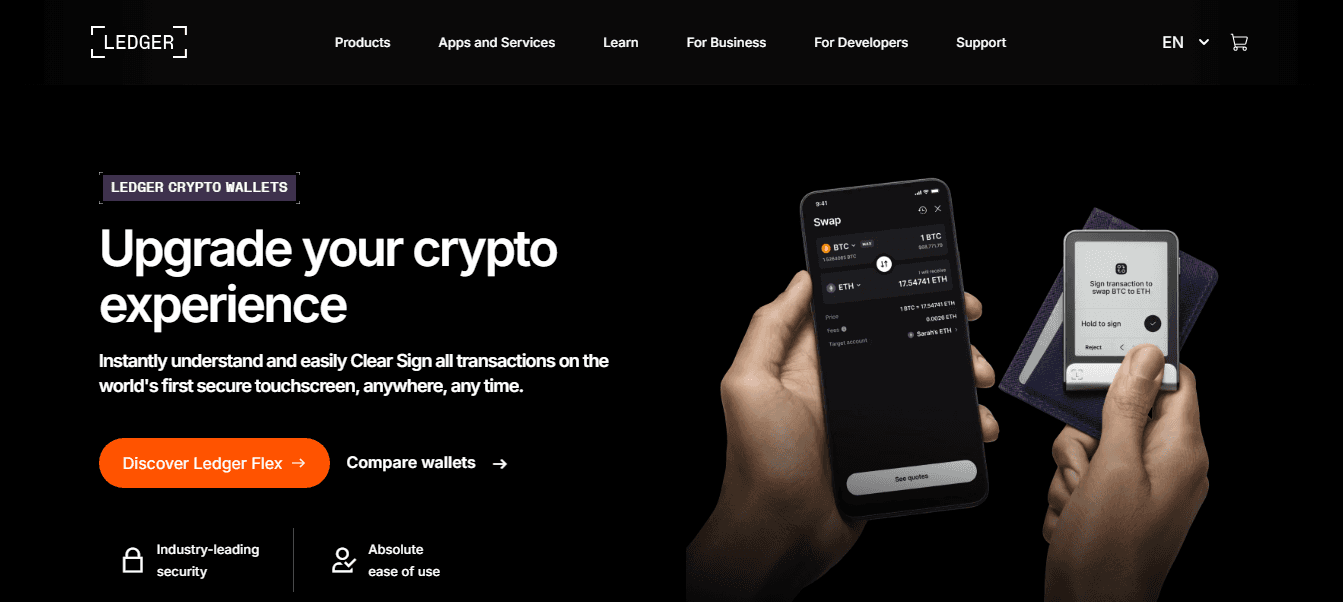
Ledger Login: A Deep Dive into Secure Crypto Access
As the crypto industry continues to evolve, so does the importance of self-custody and secure asset management. For investors, traders, and long-term holders, one solution consistently stands out — Ledger hardware wallets. These devices combine physical security with advanced cryptographic protection, making them among the most trusted tools in the industry.
But owning a Ledger wallet is just the beginning. To truly unlock its capabilities, you’ll need to understand the Ledger Login process — a unique authentication method that replaces traditional usernames and passwords with hardware-based security.
What Is Ledger Login?
The Ledger Login isn’t a standard “sign in” process like what you’d find on a website or exchange. Instead, it’s a secure authentication protocol that takes place between your Ledger hardware wallet (such as the Ledger Nano X or Nano S Plus) and Ledger Live, the official software interface.
When you connect your Ledger device to Ledger Live, the app verifies the authenticity of your hardware and establishes an encrypted communication channel. This is your Ledger login — a process that ensures only the verified hardware owner can access or authorize transactions.
Unlike centralized systems, there are no passwords stored on servers and no cloud-based accounts to hack. Your credentials exist solely within your device and are protected by a Secure Element chip, designed to withstand both digital and physical attacks.
Ledger Live: The Interface for Secure Access
Ledger Live is the official desktop and mobile application that interacts with your Ledger device. It’s available for Windows, macOS, Linux, Android, and iOS, and can be downloaded safely from Ledger.com/start.
This software acts as your dashboard for managing crypto assets, offering the ability to:
View account balances and transaction history
Send and receive cryptocurrencies
Stake assets like ETH, DOT, or ADA
Install blockchain-specific apps on your Ledger
Update firmware securely
Access buy, sell, and swap services via trusted third-party partners
Every action within Ledger Live requires physical confirmation on your hardware wallet. This means even if your computer is infected with malware, unauthorized transactions cannot occur.
Step-by-Step: How the Ledger Login Process Works
Here’s a breakdown of the secure flow every time you access your Ledger device through Ledger Live:
1. Launch Ledger Live
Open the Ledger Live app and ensure it’s up to date. Updates often contain essential security and compatibility patches.
2. Connect Your Ledger Wallet
Use the supplied USB cable or Bluetooth (Nano X) to connect your device. Power it on by pressing both buttons.
3. Enter Your PIN
Input your unique PIN directly on the hardware wallet. This step decrypts your private keys locally without ever exposing them to your computer or phone.
4. Device Authentication
Ledger Live performs a Genuine Check — an internal verification that ensures the device firmware is legitimate and hasn’t been tampered with.
5. Secure Session Initialization
Once verified, an end-to-end encrypted channel is established between the Ledger and the Ledger Live app. This marks the completion of your “login” — a cryptographic handshake confirming device authenticity.
6. Access Portfolio and Transactions
After authentication, you can view and manage your assets within Ledger Live. Each operation, such as sending crypto or installing apps, must be approved manually on your device.
This process eliminates the concept of “remote login.” You don’t log into a Ledger account — you authenticate ownership locally through cryptography.
The Security Architecture Behind Ledger Login
Ledger’s security model is built around three core technologies:
Secure Element (SE) Chip – This chip, similar to those used in passports and credit cards, isolates private keys from external connections. It ensures that even if your computer is compromised, your keys remain safe.
BOLOS Operating System – Ledger’s custom OS runs on top of the Secure Element, separating each blockchain app into its own sandboxed environment. This prevents cross-asset data exposure or interference.
End-to-End Encryption – All communications between Ledger Live and your device are encrypted using strong cryptographic standards. This prevents interception or tampering by third parties.
Together, these elements make Ledger Login one of the most resilient authentication methods in crypto hardware.
Common Issues and Troubleshooting
While Ledger’s design is robust, users may occasionally encounter connectivity or authentication issues during login. Common solutions include:
Ledger Not Recognized: Ensure Ledger Live is updated and the correct drivers are installed. Try another USB port or disable VPNs that may block communication.
Genuine Check Fails: Restart your computer and Ledger device. If it persists, reinstall Ledger Live from Ledger.com/start.
Firmware or App Mismatch: Update both the firmware and installed apps to ensure compatibility with Ledger Live.
Bluetooth Pairing Problems (Nano X): Reset Bluetooth connections and ensure your phone’s OS is compatible.
If your device resets or the PIN is lost, you can restore your wallet using the 24-word recovery phrase generated during setup. Always store this phrase offline in a secure location.
How Ledger Login Protects Against Attacks
The design of Ledger’s login process directly addresses the most common attack vectors in the crypto space:
Phishing Attacks: There’s no website login, meaning fake “Ledger login” pages cannot steal credentials.
Malware and Keyloggers: Transactions must be confirmed physically on the hardware device, rendering keyloggers useless.
Exchange Hacks: Since Ledger doesn’t hold your assets, exchange breaches can’t affect your holdings.
Remote Exploits: The Secure Element chip ensures no external process can read or copy your private keys.
This zero-trust design means security doesn’t rely on a central system — it’s enforced at the hardware level.
Why Ledger Login Is the Standard for Crypto Security
Ledger’s login system represents a shift away from web-based authentication toward decentralized self-custody. Instead of trusting an exchange or third-party wallet, users interact directly with the blockchain through their hardware.
This model provides three key advantages:
User Sovereignty: Only you control your private keys.
Resilience: Hardware protection prevents unauthorized access even on compromised devices.
Transparency: Ledger Live’s open-source components and firmware verification add an extra layer of trust.
With over 6 million devices sold and 5,500+ supported assets, Ledger’s infrastructure has become the global benchmark for secure crypto storage and authentication.
Final Thoughts
The Ledger Login process isn’t just another way to access your crypto wallet — it’s a reimagined model for digital security. By replacing fragile password systems with hardware-based authentication, Ledger empowers users to take control of their financial sovereignty.
Every login is a cryptographic proof of ownership, every transaction a deliberate act of authorization, and every device a personal vault that only you can unlock.
In a digital age where online threats continue to evolve, Ledger Login stands as a reminder of what true crypto security looks like — trustless, tamper-proof, and entirely in your hands.